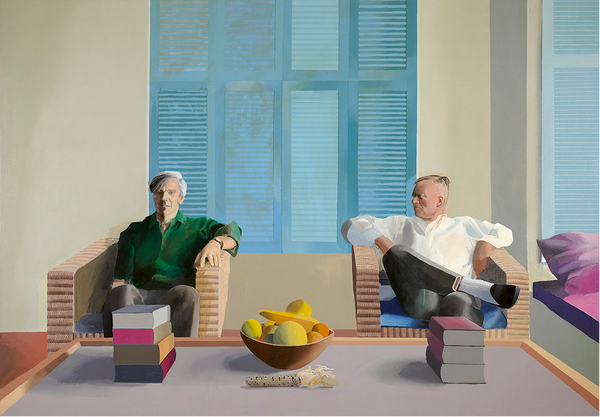
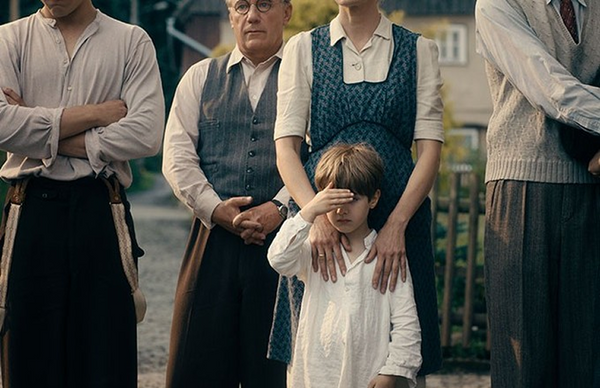
A roundup of Europe’s must-see art exhibitions for spring 2026: from Cézanne and Matisse to Calder and Basquiat.
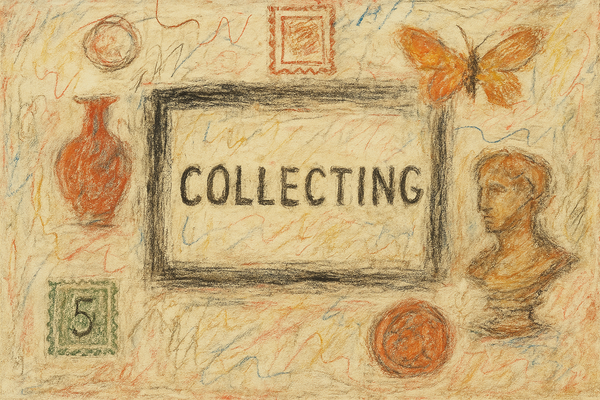
If an artist is the one who sparks the creation of art, the collector is the one who weaves together all its realms. It’s no secret that many museums have grown from private collections—renowned patrons supported artists, commissioned their works, gathered the art of their time, and preserved it for history. “Not everyone will be carried into the future,” and the discerning choices of a collector often prove as critical to an artist’s legacy across centuries as the judgments of art market professionals. In the early 20th century, Rudolf Leopold, a student of ophthalmology, began collecting not only the celebrated Gustav Klimt but also the then-underappreciated Egon Schiele. His vast collection eventually grew into an entire building in Vienna’s Museum Quarter, and Schiele became one of the most renowned artists of the 20th century. The collector stands at the crossroads of multiple worlds: the vibrant realm of living art, the institutional process, and the market. When collectors focus on the art of their time, they often witness firsthand the birth of masterpieces and the evolution of artists. It’s no secret that many collectors and artists become close friends. Remarkably, some collections become catalysts for art movements that resonate for centuries. Take Ilya Ostroukhov, a landscape painter and trustee of Moscow’s Tretyakov Gallery. In the 1910s, he developed a passion for Russian icons, acquiring 30 icons from the 15th and 16th centuries in just the first five months of his fascination. Before him, icons were primarily collected by Old Believers, but Ostroukhov elevated them to the same level as his European contemporaries. His “icon mania” soon captivated Moscow. We know the profound influence of Russian icons on the Russian avant-garde—and the avant-garde’s impact on global art. It’s fascinating to consider how 20th-century art history might have unfolded if Ostroukhov had returned to collecting antiquarian rarities instead of icons. Collectors rescue artists and movements from obscurity, and as a work of art gains recognition, its value soars. During his lifetime, Vincent van Gogh’s paintings were virtually worthless and unsold. It was the interest of American collectors in the early 20th century, followed by heightened attention from the Asian market in the latter half, that elevated him to “blue-chip” status. In 1987, amid Japan’s economic boom, his Sunflowers sold for $39.9 million at Christie’s. Being a collector seems to carry immense responsibility: to view a collection as an investment, to remain mindful of its influence on artists’ lives and future museums. Many collectors hesitate to call themselves such, feeling their collections lack sufficient gravitas. Yet, it’s worth remembering that collecting art is, above all, a profound joy, accessible at any budget. Consider Herbert Vogel, a postal clerk and friend of the then-unknown artist Sol LeWitt, who, on a modest salary, amassed 2,500 works by some of the 20th century’s most celebrated artists. Collecting is an endless source of friendship and inspiration.
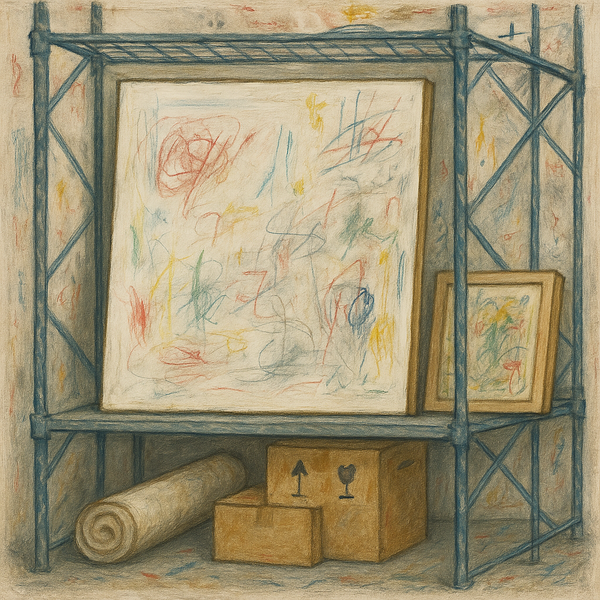
Storing art the right way protects its beauty and value. This quick guide covers essential tips to keep your collection safe and well-preserved for years to come.
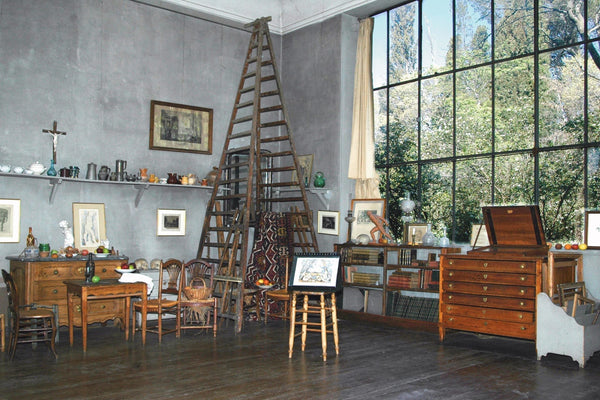
Step beyond the museum walls and into the vibrant world of Parisian artists. This article takes you inside the city’s hidden ateliers — where creativity thrives and contemp...
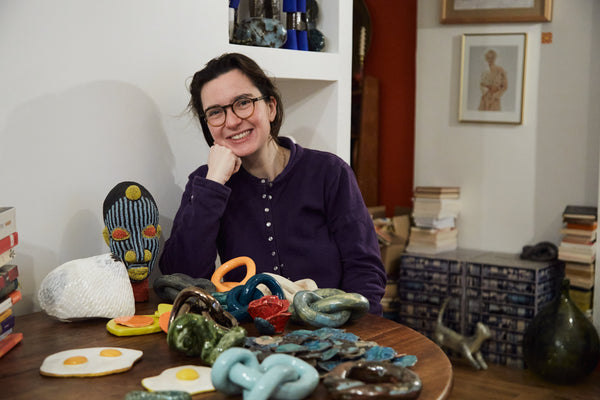
We had the pleasure of speaking with Tara Heuzé-Sarmini—a social entrepreneur, art collector, and lifelong creator whose work seamlessly blends activism, community-building, and artistic expression. For Tara, art is more than an aesthetic pursuit; it’s a powerful tool for storytelling, connection, and change. Born in Paris into a multicultural family, Tara has lived across Russia, England, and the United States. She pursued studies in political science, finance, energy and environment, always focusing on tackling social challenges. She is the founder of Règles Élémentaires, a non-profit organization fighting period poverty, and Commune, the world’s first coliving company for single-parent families. But beyond her entrepreneurial ventures, Tara has a deep and personal connection to art. A passionate sculptor since childhood, she has been working with ceramics since the age of three—an early creative spark that naturally led to her love for collecting contemporary art. Eva: Would you say your passion for ceramics sparked your interest in collecting art, or was it something you were exposed to while growing up? Did your parents collect art? Tara: I think it’s both. My mother’s side of the family, in particular, has always been very interested in art. My cousin’s godfather is a well-known art dealer, and one of my mother’s childhood friends became a major contemporary art collector. So, even though my parents didn’t necessarily build a big collection themselves, I was exposed to that world from an early age. Beyond that, my family has always believed in supporting emerging contemporary artists. And as an artist myself, I understand firsthand how much work and resources go into creating art. Art has the power to shape narratives, construct representations, and translate ideas. So, when I grew up and started earning money, I wanted to contribute to that at my own level. I really started collecting when I lived in Russia. I was very close to a circle of contemporary dissident artists, and we spent a lot of time together in the studio. I bought some pieces and received others as gifts — it was very informal at first. Generally speaking, I try to consume less and in a less materialistic way, trying to focus more on experiences and creating meaningful memories. And for me, art is the perfect medium for that. Eva: You mentioned that when you travel, you prefer to buy art instead of typical souvenirs. Is that right? Tara: Yes, absolutely. Whenever I travel — whether abroad or just to a new region—I try to bring back something that will remind me of that place and moment. And when I give gifts, I want them to tell a story rather than just being objects. For several years now, I’ve prioritized buying art when I can — or at the very least, local crafts. But I wouldn’t call myself a professional collector. The pieces I buy are always very accessible, and it’s always about a personal connection. If they happen to gain value over time, great — but that’s never the motivation behind my choices....